Quantum Theory, One Experiment at a Time
What it is
This is a guided course in the foundations of quantum theory. It follows the first three chapters of Asher Peres's Quantum Theory: Concepts and Methods, which is a graduate text, but it starts from school physics and builds everything else as it goes. The wording and the figures are new, and the order of ideas is the book's.
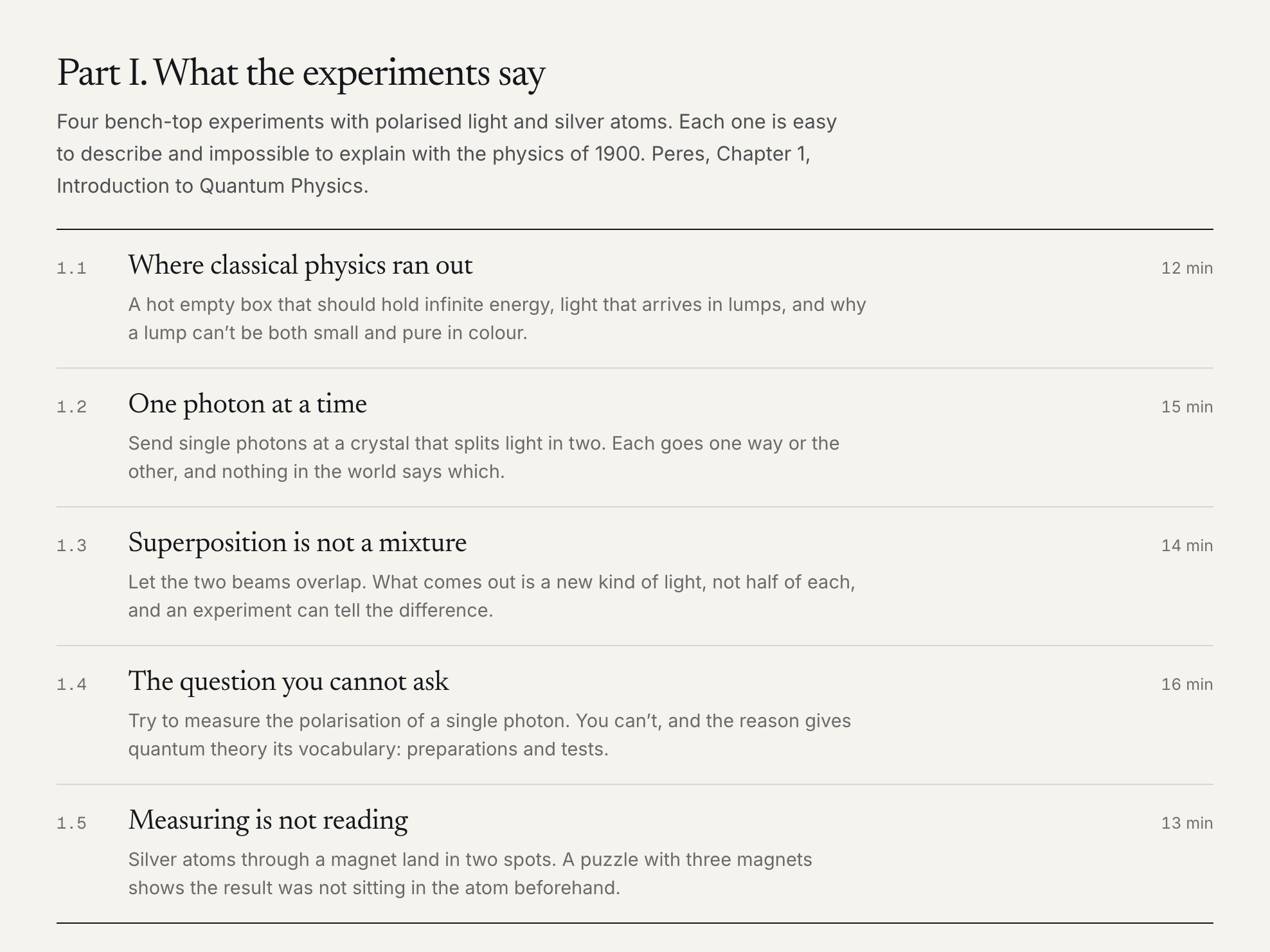
There are thirteen lessons in three parts. The first is a set of experiments with polarised light and silver atoms that the physics of 1900 can't explain. The second works out the rules those experiments force on you, and the third finds the mathematics that fits the rules. By the last lesson you're working with state vectors, inner products, observables and density matrices, and you know which experiment made each one necessary.
How a lesson works
Each lesson is built around an experiment you run on the page. Before it shows you what happens, it asks you to commit to a prediction. Then you run it, read a short list of what to keep, and answer a few questions to check you have it. Your progress is saved in your browser.
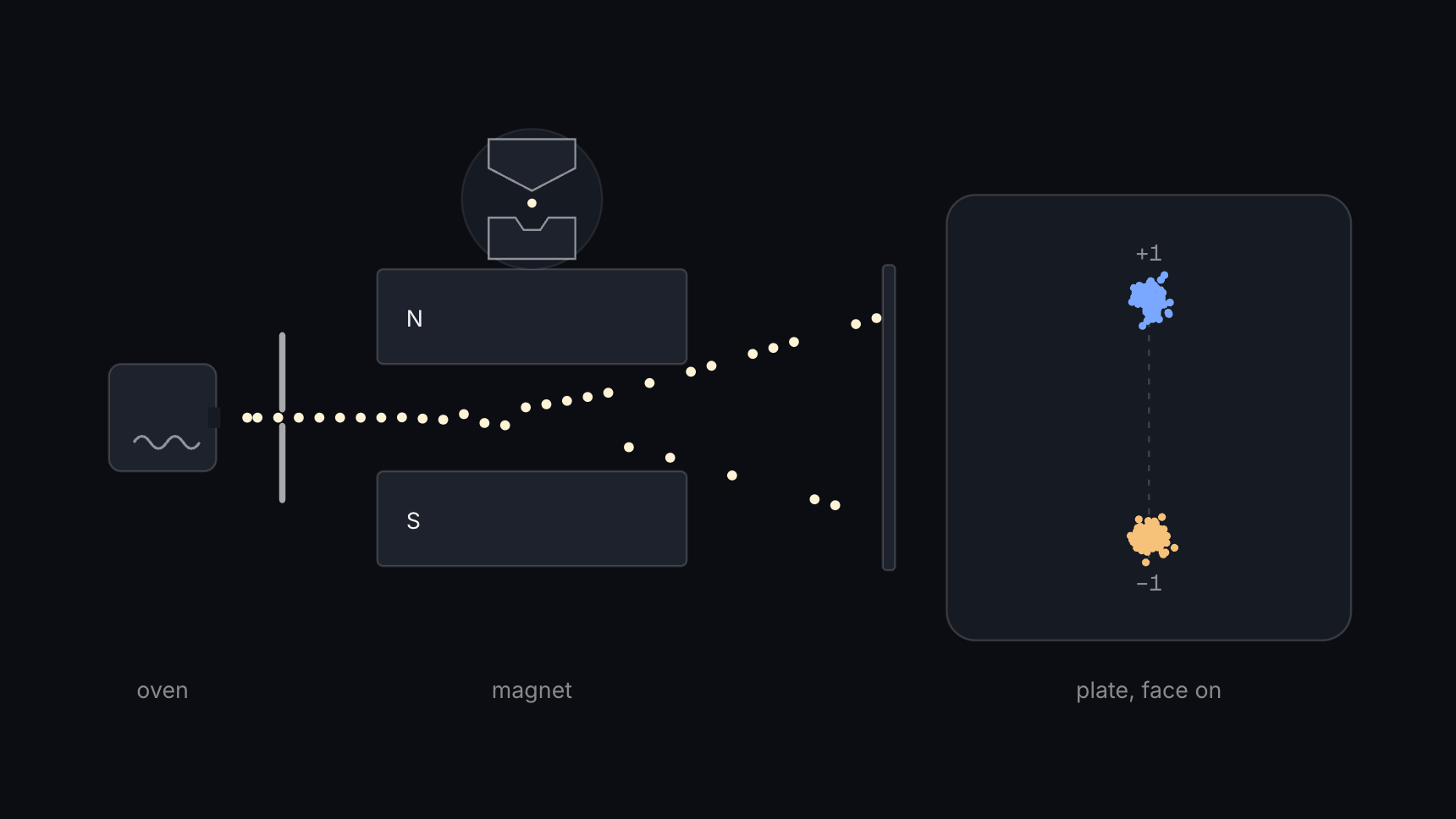
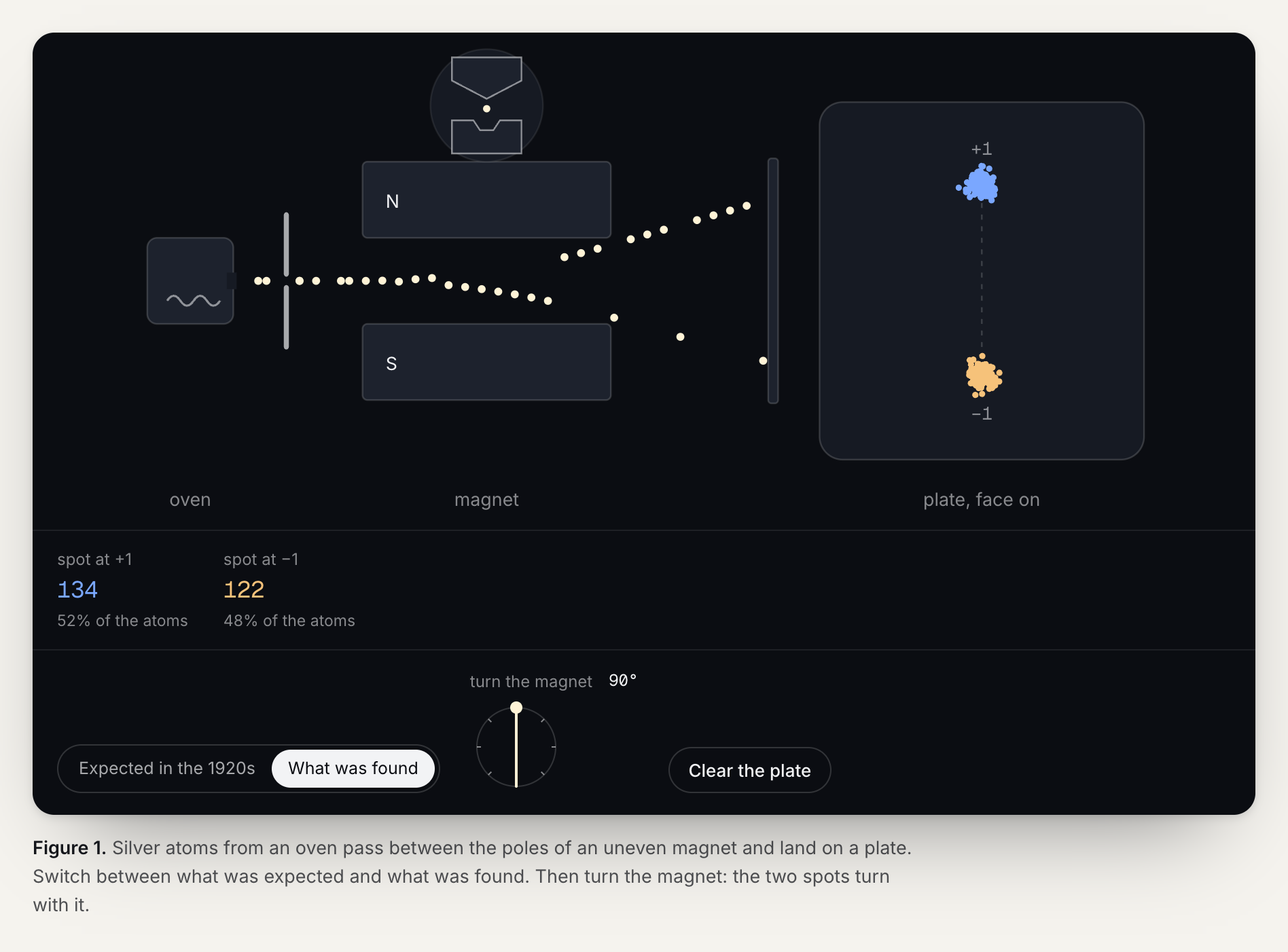
Lesson 1.5 is a good example. Silver atoms leave an oven, pass through an uneven magnet and land on a plate. In the 1920s people expected a smear, and what turned up was two spots. You can switch between the two results, then turn the magnet and watch the spots turn with it.
How it's built
The course lives in the same codebase as Retrospect, and is served as its own site. It has 25 interactive figures drawn as SVG. The physics behind them sits in small functions with their own tests, so the numbers a figure shows come from code that's been checked. The equations are typeset with KaTeX.
Why I made it
I wanted a way into quantum theory for someone who's just finished school. It starts with experiments, and brings in each piece of maths only when an experiment needs it. So far it covers the first three chapters of the book.